
Kevin Warsh Fed Chair is taking over from Jerome Powell on May 15 — and the shocking, hidden crypto bombshell buried in his 69-page financial disclosure changes everything about how you should think about interest rates, your mortgage, and Bitcoin.
Jerome Powell’s term ends May 15, 2026. Kevin Warsh has been nominated to replace him, marking a major leadership shift at the central bank. But this isn’t just a routine changing of the guard. The man about to take control of U.S. monetary policy has a background, a philosophy, and a personal portfolio that could send shockwaves through interest rates, the job market, the stock market — and crypto.
Here’s everything you need to know, broken down simply.
First: What Does the Fed Actually Do?
Before we get into Warsh, let’s make sure we’re on the same page.
The Federal Reserve’s job is to keep two things in balance: maximum employment and low inflation. They do this by controlling interest rates through a 12-member group called the FOMC — the Federal Open Market Committee. These 12 people decide whether to raise rates, lower them, or hold steady.
The Fed chair is the leader and public face of that group. When a rate decision gets announced, it’s the chair’s voice you hear. Starting May 15, that voice will be Kevin Warsh’s.
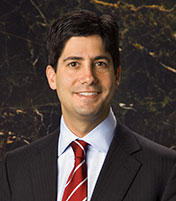
Who Is Kevin Warsh — And Why Is He Different?
Warsh is a former Fed governor who served from 2006 to 2011. He’s been a vocal critic of how the Fed handled the 2021 inflation surge — and he’s made no secret of his belief that the central bank needs to get more aggressive about tightening monetary policy.
His financial filings show that Warsh and his wife Jane Lauder have combined holdings of approximately $192 million — wealth that eclipses all recent Federal Reserve chairs. His wife sits on the board of Estee Lauder; Forbes estimates her personal net worth at $1.9 billion.
But it’s not the wealth that’s turning heads. It’s what’s inside the portfolio.
The Hidden Crypto Bombshell Buried in a 69-Page Government Document
On April 14, Warsh filed his mandatory financial disclosure with the U.S. Office of Government Ethics. Most people ignored it. They shouldn’t have.
Warsh’s 69-page financial disclosure shows holdings in Solana, Optimism, dYdX, Compound, Blast, Polymarket, and a Bitcoin Lightning startup called Flashnet — stakes in at least 20 crypto and Web3 projects, including DeFi protocols, Ethereum scaling networks, and the prediction market Polymarket.
His portfolio spans DeFi protocols, Ethereum scaling networks, a Bitcoin Lightning startup, and prediction markets. Most positions are small venture bets held through fund vehicles. But the bigger mystery is the $100 million sitting in the Juggernaut Fund — whose underlying assets are shielded by confidentiality agreements.
No previous Fed Chair nominee has had this kind of exposure to the crypto ecosystem. Ever. This is genuinely unprecedented.
There’s another layer: Warsh earned $10.2 million in consulting fees from the investment office of Wall Street giant Stanley Druckenmiller — one of the loudest macro voices on the planet and an open bitcoin bull. The next Fed chair’s mentor is publicly pounding the table on crypto as the inflation hedge of the century.
3 Powerful Ways Kevin Warsh Directly Affects You
1. Your Mortgage and Auto Loan Rates Could Rise
Warsh has been preaching quantitative tightening for years. That means the Fed sells off bonds and mortgage-backed securities from its balance sheet — the same way you might sell stocks. When that happens, the 10-year Treasury yield rises. And the 10-year Treasury is the baseline for essentially every long-term interest rate in America — mortgages, auto loans, business loans.
Warsh hates how 2021’s inflation was handled. He wants to fix it fast. That philosophy points directly toward higher borrowing costs in the near term.
2. The Job Market Could Get Weaker
Higher interest rates don’t just hit homebuyers. They hit every small business trying to expand.
Most small businesses grow through debt — they don’t have the cash reserves of a Google or Microsoft. When rates stay high, borrowing to open a new location, buy new equipment, or hire new staff becomes too expensive to justify. The result: slower hiring, slower job growth, and a labor market that tightens not because the economy is weak, but because money is expensive.
Warsh suggested a “new framework” for inflation during his confirmation hearing, but offered few specific details — which means the job market impact of his approach is still an open question.
3. Stock Market Volatility Could Surge
The stock market loves cheap money. When rates are low, capital floods into companies, earnings grow, and shareholders win. When rates are high, the opposite happens — companies borrow less, invest less, earn less, and stock prices reflect that.
A Warsh-led Fed that stays hawkish on inflation means sustained pressure on equity valuations. U.S. stocks fell after Warsh’s confirmation hearing concluded, with the S&P 500 and Nasdaq each dropping about 0.4% — a small preview of how markets may react to his actual policy decisions.
The institutions aren’t fighting crypto anymore. They’re becoming it.
What Happens Next
Powell’s term expires May 15. Sen. Thom Tillis has vowed to block Warsh’s confirmation vote until the DOJ investigation into Powell is fully resolved — meaning the timeline is tight but the direction is clear. Warsh is coming.
When he arrives, three things in your financial life are worth watching closely: your mortgage rate, your job market, and any crypto positions you’re holding.